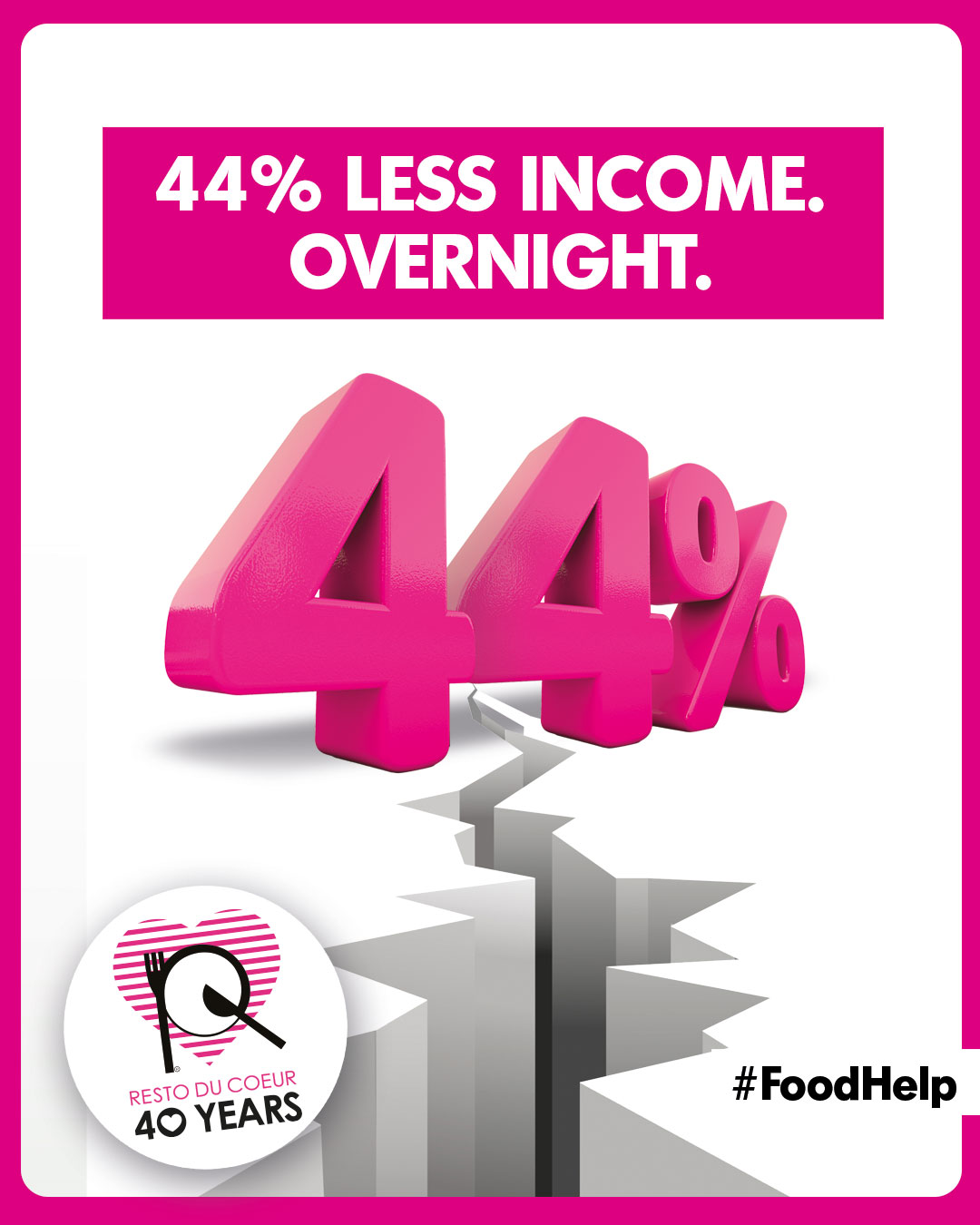
Not all Restos du Cœur observe the same changes at the same pace. But all agree on one point: there is no longer any margin.
At the Resto du Cœur in La Louvière, the team explains that it is still too early in the year to have sufficient perspective. Yet new cases are already appearing.
And above all, the capacity has its limits and is capped: the Resto du Cœur in La Louvière reports being unable to support more than 80 families or prepare more than 250 food parcels, and needing to assign a volunteer specifically to new cases.
At the Resto du Cœur in Wavre, the fear is of a gradual shock building month after month: the impact of the reduction in European products will be felt more strongly later in the year and in 2027, and the effect of time‑limited unemployment benefits “will increase steadily until the end of June”.
Wavre also highlights an immediate, very concrete constraint: logistical saturation, with a lack of space and a limited cold room.
At the Resto du Cœur in Mouscron, the impact is already visible. The team notes an increase in the number of people requesting a parcel, particularly those excluded from or sanctioned within unemployment or social‑assistance schemes.
And some situations are striking in their brutality:
“They come with an official letter they do not understand, sometimes with no immediate resources, sometimes in a state of shock.”
The testimonies also reveal a reality too often forgotten: food aid is not just about “filling a plate”. It touches on dignity, health, and access to employment.
At the Resto du Cœur in Tienen, the team explains: “We already have to be more sparing in the distribution of milk.”
The manager warns of the lack of hygiene products — “nappies and shampoo/shower gel” — and describes the direct consequences: isolation, difficulties attending job interviews, school absences due to lack of menstrual products.
At this stage, some Restos du Cœur, including the one in Ostend, have not yet observed an immediate impact.
But this diversity is not reassuring. It may also mean that the effects will come later when stocks run low, when the new measures take effect, when situations deteriorate.
One reality emerges across the responses: the Restos du Cœur are increasingly becoming a place of immediate refuge. Sometimes the last one.
At the Resto du Cœur in La Louvière, the team also describes a tension that goes beyond food aid: people “cannot get anyone to listen to them in one service or another and offload their distress onto us.”
This too is the reality on the ground: people come for a parcel… and they come seeking a place where they are not reduced to a case file.
Weakening food aid is not a technical adjustment. It is rolling back solidarity where it is most needed. And when resources fall while needs rise, it is those already most fragile who pay the price.
We will continue to highlight this reality in order to make visible, factually, the concrete consequences of these measures on the ground — and to act, together with the network, so that the right to food and dignity does not become a variable for adjustment.
Everyone can help in their own way: by making a donation, by sharing our work, or by getting involved alongside us.