
<< WHAT'S NEW ?
World Health Day: when access to healthcare becomes a major issue
April 2026
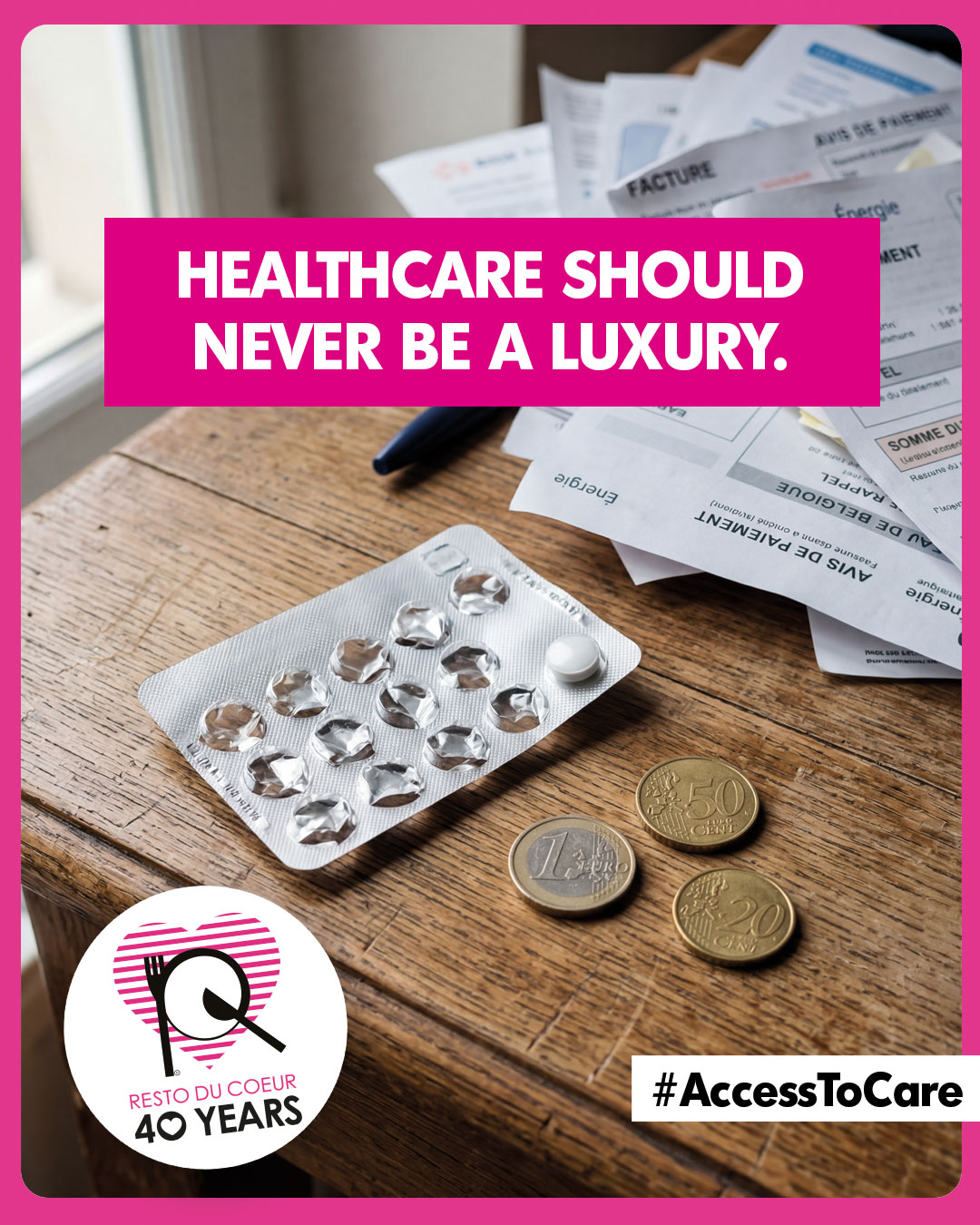
On 7 April, World Health Day serves as a reminder of an obvious truth: getting medical care should never be a luxury.
In Belgium, the healthcare system remains one of the most accessible in Europe. Yet for a growing number of people, access to care is becoming increasingly fragile. Between the rising cost of living and recent changes to the reimbursement of healthcare and medicines, many households are now forced to make difficult choices.
Reforms that change access to medicines
Since 1 January 2026, several measures have come into force, directly affecting what patients pay for their medication.
A minimum co-payment has been introduced: patients must now pay at least €1 per box if they are eligible as a Bénéficiaire de l’Intervention Majorée (BIM) [Beneficiary of Increased Reimbursement], and €2 for others, including for certain medicines that were previously fully reimbursed (INAMI, 2026) [National Institute for Health and Disability Insurance]).
In addition, some medicines have been reclassified into categories with lower reimbursement rates, increasing the out-of-pocket cost for patients (CBIP, 2026 [Belgian Centre for Pharmacotherapeutic Information]; Testachats, 2026 [Belgium’s leading consumer protection organisation]). According to Testachats, these measures are expected to generate more than €100 million in savings.
But in practice, this means that even essential treatments now come at a cost, which can become a barrier for the most vulnerable.
A protective system… but not sufficient
The Belgian system includes important protective mechanisms, such as the BIM status or the Maximum À Facturer (MAF) [maximum billing system], which caps a household’s annual healthcare expenses (INAMI).
Some recent measures strengthen this protection, notably the ban on supplementary outpatient fees for those with BIM status (INAMI, 2025-2026).
However, these mechanisms do not always offset the cumulative effects of rising costs. A portion of healthcare expenses still remains payable by patients through the co-payment.
A very real renunciation of care
Figures show that access to healthcare remains a significant challenge.
In 2025, nearly 3 in 10 Belgians reported having foregone healthcare, mainly for financial reasons (Listen survey for Ethias, 2025).
41 % of residents in Wallonia and Brussels say they have postponed or given up at least one form of care in the past 12 months.
Dental care is among the most affected, with renunciation rates reaching 20 % among working adults and more than 40 % among people on long-term sick leave.
Young people are not spared: nearly one in two students say they have already foregone at least one form of care (Solidaris, 2025).
These figures reflect a worrying reality: for a growing share of the population, seeking medical care now involves making trade-offs.
There is also reason to question the longer-term effects of certain healthcare decisions. Conditions that could be treated quickly risk worsening if access to care is delayed. In the long run, this can lead to more serious human consequences and, paradoxically, higher costs for society.
Ensuring real access to care
At the Restos du Cœur, healthcare assistance is an integral part of our work, alongside food aid, housing support and education.
On World Health Day, it is essential to remember that access to care is not limited to the existence of a reimbursement system. It requires that everyone be able, in practice, to see a doctor, buy their medication and undergo a treatment.
In a context where reforms aim to control public spending, it is crucial to ensure that people in precarious situations are not the first to forgo care.
Because healthcare should never be a variable in budget adjustments.