<< WHAT'S NEW ?
Three women chefs from the Restos du Cœur in the spotlight
October 2025
On the occasion of International Chefs’ Day on 20 October, the Restos du Cœur pay tribute to those who cook with passion and solidarity each and every day. Their mission extends far beyond the plate and is geared to easing hunger, rebuilding connections, passing on knowledge, and restoring dignity.
Three women chefs share their stories: Isabelle in Mariembourg, Sophie in Namur and Annabel in Charleroi. Three different paths, one common passion: cooking to help.
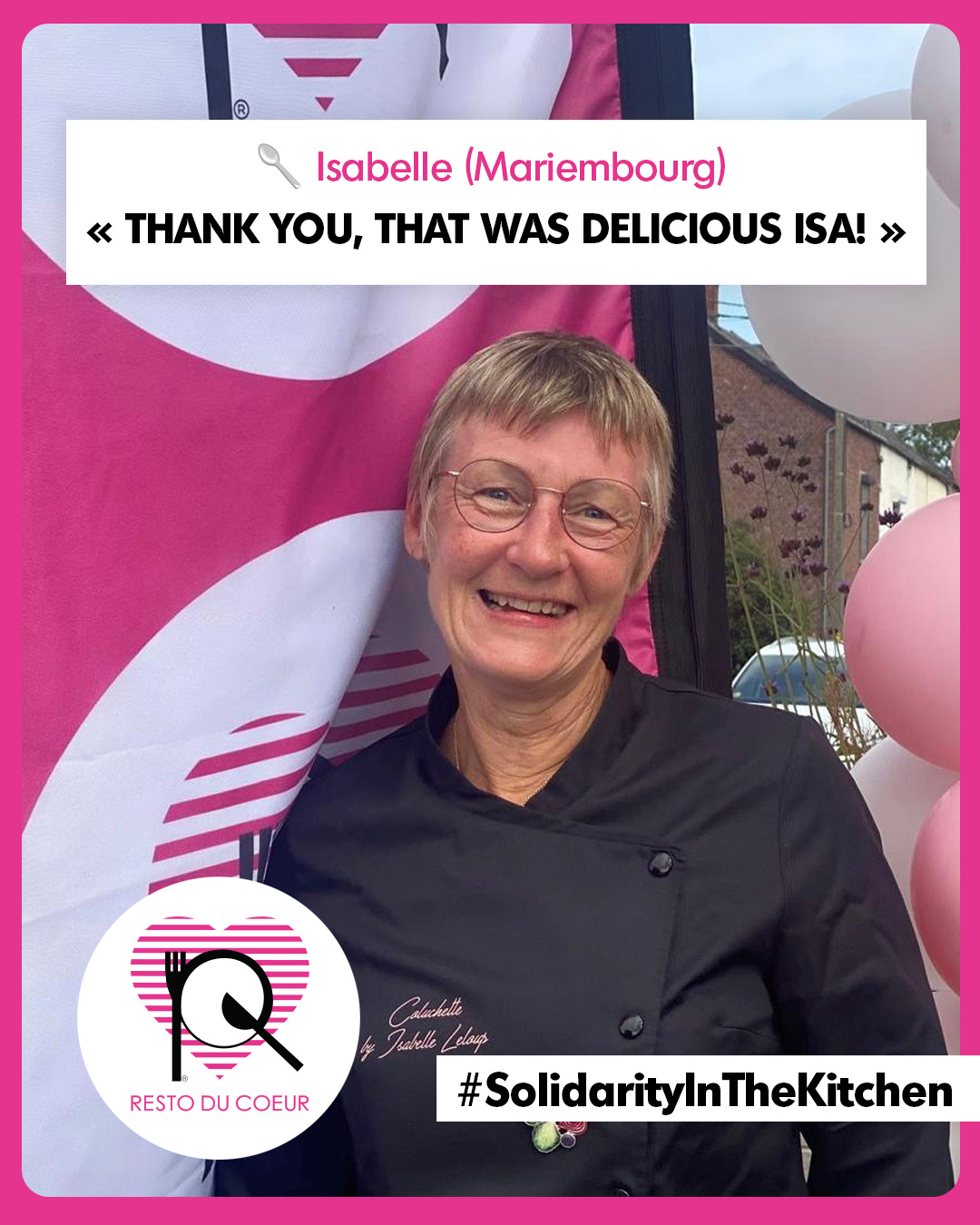
Isabelle: “Thank you, that was delicious Isa!”
A former gourmet chef, Isabelle left her restaurant in Baileux to put her experience and expertise at the service of the Resto du Cœur in Mariembourg. “I was keen that even a soup – which wasn’t exactly the star of my menu at the time – should become a comforting dish cooked with care.”
Together with her fellow women chefs and a team of volunteers, she prepares some 70 meals a day. What gives her the most energy? A single phrase: “If just one guest says ‘Thank you, that was delicious Isa!’, it makes my day.”
But she remains clear-sighted: “I am worried about the future. We are seeing demand rising, donations falling, and costs exploding (energy, foodstuffs, etc.). But I hold on to hope thanks to my team.”
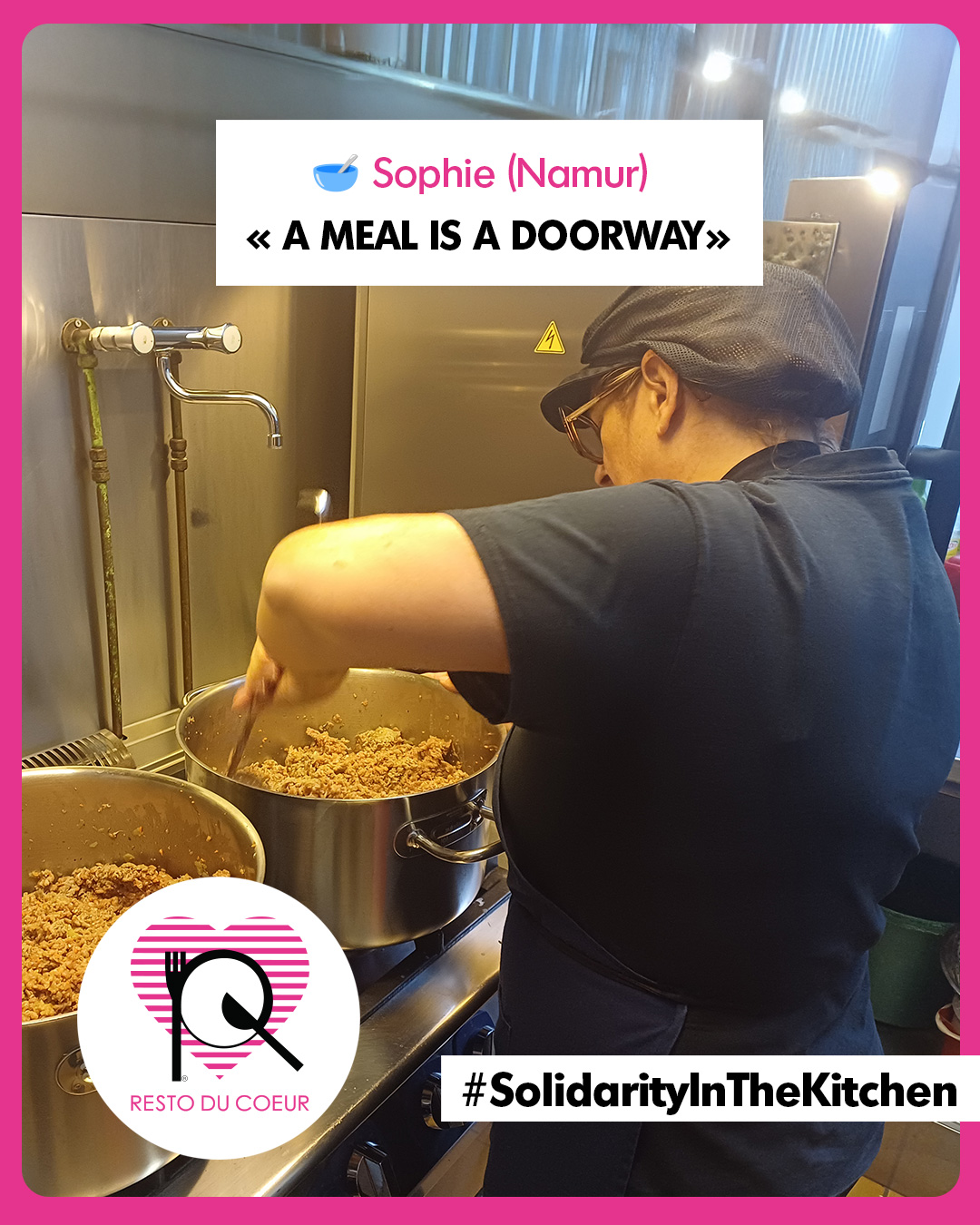
Sophie: “A meal is a doorway”
Sophie has been head of the catering service at the Resto du Cœur in Namur since 1989. Her daily routine is full of coordination, surprises, and finely tuned organisation. “Sometimes I have to prepare a menu ‘blind’, not knowing if I’ll have all the ingredients. So we anticipate, adapt, and adjust. It’s a real school of flexibility.”
But beyond the plate, she reminds us of what is essential: “A meal is a way in. An excuse to help people in other ways: social services, different kinds of support, listening, reintegration…”
She also shares her concerns: “With reforms and cuts to subsidies, we wonder how we’re going to manage. We’re already seeing more users. And this is only the beginning.”
Memories that linger
All three chefs have cherished memories.
- For Isabelle, a day of laughter over couscous prepared in djellaba by the whole team.
- For Sophie, the joy of seeing beneficiaries reconnect, and sometimes even find their better half.
- For Annabel, the emotion of a little boy who gave her a drawing for her birthday, and the visit of the King and Queen who came to meet her.
These moments remind us that the Restos du Cœur are not just places for food distribution, but also spaces of encounter and shared humanity.
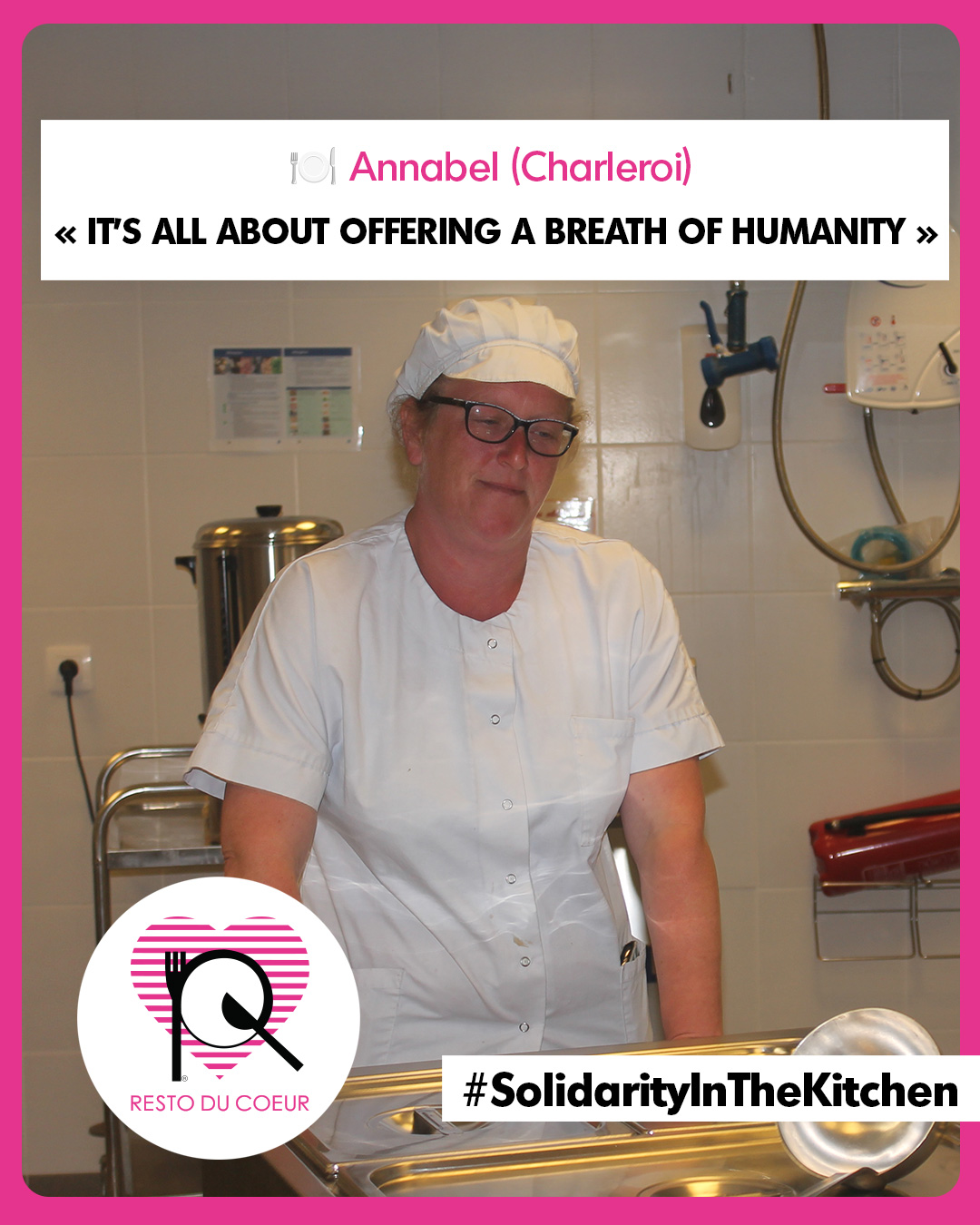
Annabel: “It’s all about offering a breath of humanity”
Annabel has been cooking for the Resto du Cœur in Charleroi for nearly 18 years. With her two cooks, her Article 60 assistants and her volunteers, she serves an average of 280 meals a day. “We simply cannot afford to waste. We avoid food waste at all costs.”
She is well aware that the future will be tough: “My greatest fear is that one day someone will say: ‘You’re making 300 meals, there are 400 people outside. Choose who gets fed.’”
For her, cooking is also a way of keeping connections alive: “Our work isn’t just about making food. It’s about offering a breath of humanity to those who have very little left.”
Volunteering: an indispensable force
In their testimonies, all three chefs insisted that nothing could be done without volunteers. But they also stress that commitment is not to be taken lightly.
“It’s not just about ‘coming to chat and have a coffee’. It’s physical, it’s demanding,” explains Sophie.
For Isabelle, volunteering brings above all a deep sense of purpose: “You feel proud of making a difference.”
And Annabel adds candidly: “You have to give without expecting anything in return, not take offence. Because every day is different, and every person is living what can at times be a very harsh reality.”
A shared passion, despite the uncertainties
On International Chefs’ Day, 20 October, Isabelle, Sophie and Annabel remind us that behind every meal served by the Restos du Cœur lies commitment, a story, and above all profound humanity.