According to the Federal Sustainable Development Indicators published in 2025, 20.2% of children under the age of 18 in Belgium were at risk of poverty or social exclusion in 2024.
In other words, more than one child in five is now growing up in circumstances that may affect their daily life, their health, their well-being and, in some cases, their education.
Poverty is not simply a lack of income. It affects many aspects of a child's life, including their diet, housing, access to leisure activities, culture and sport.
Yet all of these factors also play an important role in children's development and learning.
For the 2024–2025 school year, almost a quarter of parents regarded back-to-school costs as a significant financial burden¹. Among households with the lowest incomes, this proportion rose to more than one third.
But school costs go far beyond stationery.
Educational outings, cultural activities, school meals, digital equipment, school trips and extracurricular activities all represent additional expenses that can widen the gap between children.
Many households regularly forgo spending on leisure activities or children's activities in order to maintain the family budget2.
For the children concerned, these sacrifices can lead to a feeling of exclusion or being left out.
Inequalities are also shaped outside the classroom
Research has consistently shown that educational inequalities are closely linked to families' living conditions3.
Access to a balanced diet, decent housing, healthcare, an environment that supports learning and leisure activities all contribute significantly to educational success.
In other words, educational inequalities often have their roots long before a child enters the classroom.
At the Restos du Cœur, we believe that no child's future prospects should be limited by their family's financial situation.
That is why our work extends beyond food assistance.
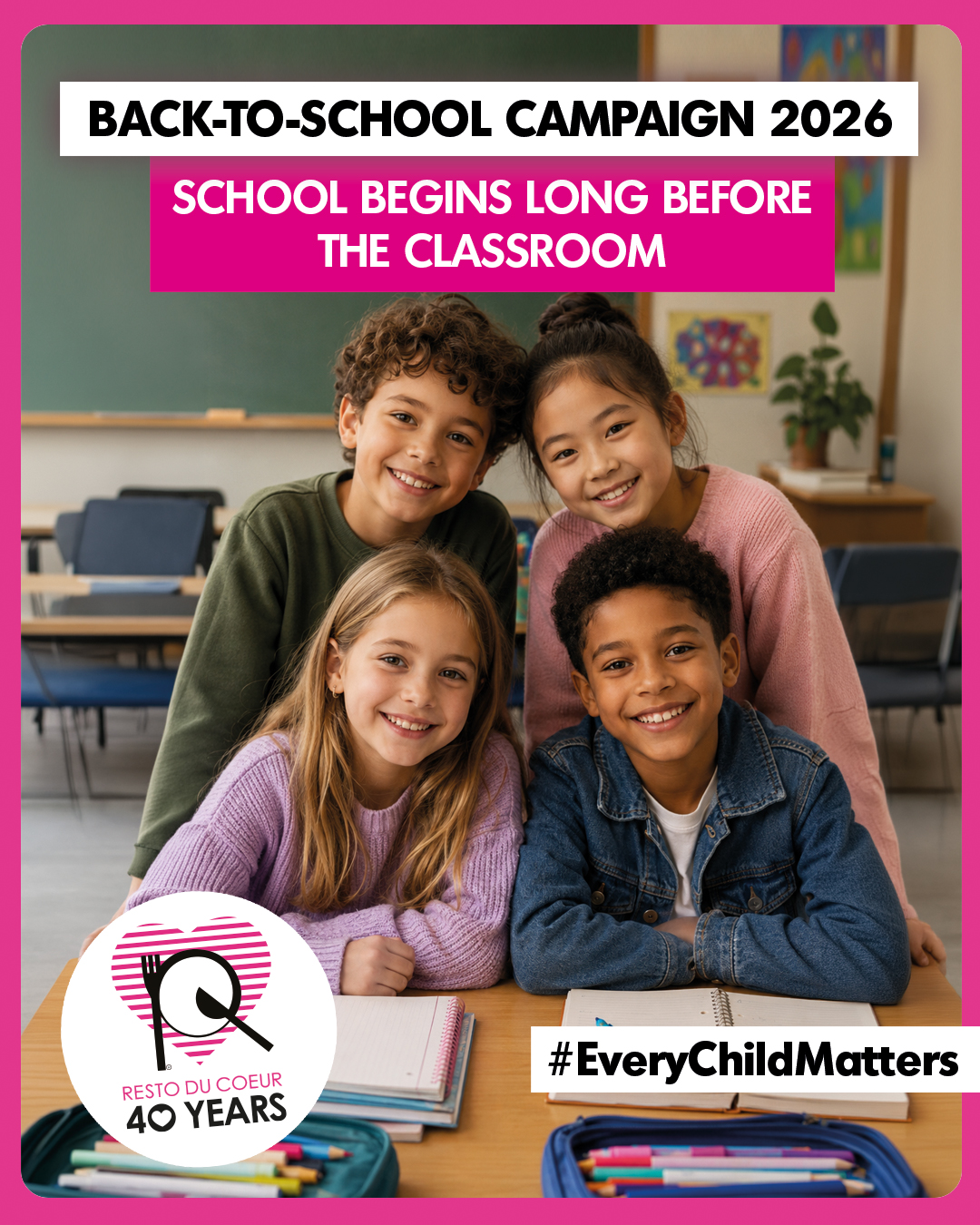
We help remove some of the obstacles that stand in children's way through our "Back-to-School Campaign", as well as the support we provide to families throughout the year.
Because before we can build the school of tomorrow, we must first ensure that every child has the opportunity to experience school fully today.
And because every child's chance of succeeding should never depend on their parents' income.
1: Ligue des Familles Parents' Barometer 2025.
2: Ligue des Familles Parents' Barometer 2025.
3: According to studies and surveys conducted by ONE, the King Baldwin Foundation and the Belgian Children's Rights Commissioner.