
<< WHAT'S NEW ?

From surplus to plate: when a simple phone call becomes an act of solidarity

November 2026

Giving one’s time, sharing one’s skills, organising a collection… There are many ways of giving of oneself.

For a business operating in the food sector, it can also begin with a very simple decision: not letting products that could still be of use to others to go to waste.

Since this year, the Resto du Coeur of Belgium Federation and the Belgian Red Cross have strengthened their collaboration in order to facilitate the recovery of food surpluses and unsold products through a single telephone number: 105.

Unsold food becoming harder to obtain

Unsold products have long represented an important source of supply for food aid organisations.

However, this resource is becoming scarcer. Companies are becoming increasingly effective at managing their inventories, while new solutions now enable part of the surplus that was previously donated free of charge to charities to be sold instead.

At the same time, needs remain particularly high. According to a study published in 2026 by the Federation of Social Services, nearly 561,000 people receive food aid at least once a year in Belgium.

In this context, every opportunity to recover additional food products matters.
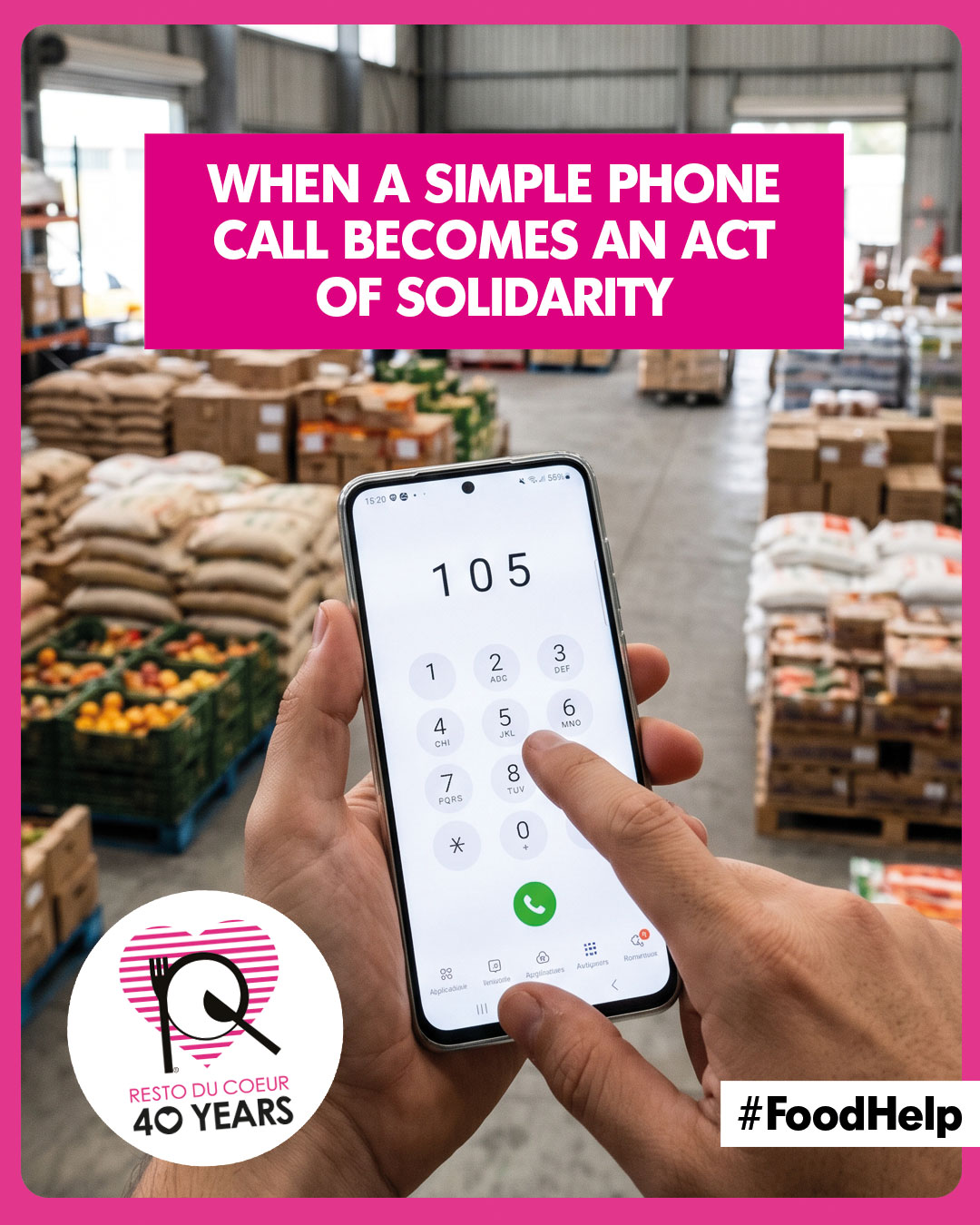
105: making the transition from surplus to donation easier

The principle is simple: when a company in the food sector has products available for donation, it can report them via 105, the Belgian Red Cross's freephone number.

The offer is logged and the Restos du Coeur can step in to collect the products directly at source. They are then redistributed through the logistical networks of the two organisations.

Dry, fresh and frozen products may all be accepted, provided they can be transported, stored and redistributed in compliance with food safety requirements.

Above all, the aim is to remove a common obstacle, i.e. to  make sure that any business wishing to donate knows immediately whom to contact.

Behind every call lies an entire chain of solidarity

A food donation does not, of course, end with a telephone call.

Products must be collected, transported, sometimes kept within the cold chain, received, stored, sorted and then delivered to the organisations able to distribute them.

Employees, volunteers, logistics teams and partner companies: each contributes a different link in this chain.

That too is a form of giving.

A company makes available what it can donate. Teams find a way to collect it. Volunteers help prepare and distribute it. And products that remain perfectly fit for consumption can ultimately become part of a meal or food parcel rather than being wasted.

The 105 service is not, of course, a complete solution to the supply challenges faced by food aid organisations. However, it does make it possible to make better use of resources that are already available and bring together those who can give and those who are in need.

Sometimes local solidarity begins with nothing more than a simple phone call.

Are you a food-sector professional with surplus stock or unsold products? Call 105!