
<< WHAT'S NEW ?

Annual Food Drive: when fridges run empty, solidarity becomes essential

March 2026

One phrase has taken hold in public debate in recent weeks: frigo vide [empty fridge].

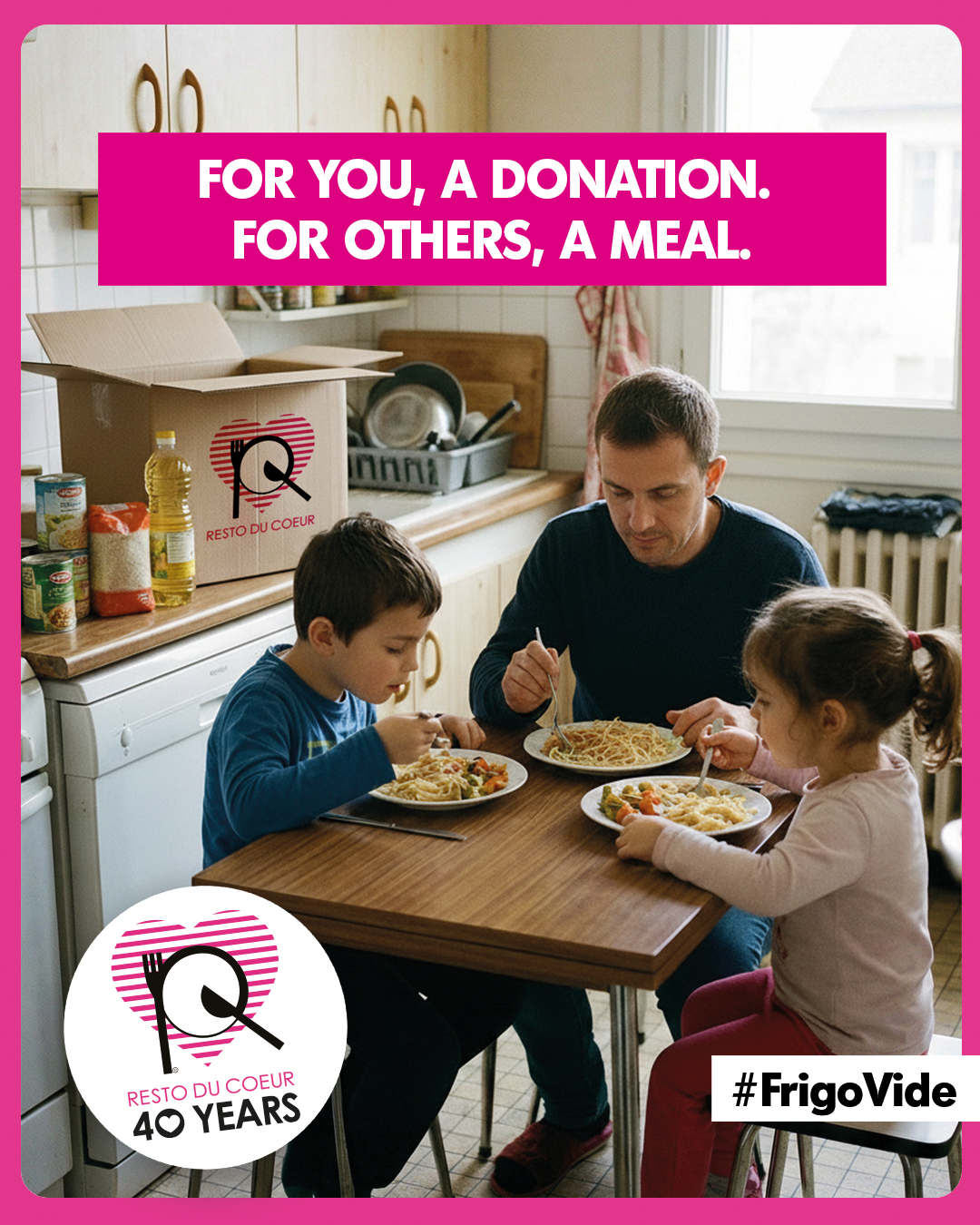
Behind the #FrigoVide– awareness campaign, widely shared in the media and on social networks, lies more than a figure of speech. It reflects a very concrete reality for many people in Belgium: having to cope with a fridge that no longer stays full until the end of the month.

The figures speak for themselves. In 2025, 16.5 % of the Belgian population, i.e. nearly 1.9 million people, were at risk of poverty or social exclusion, according to Statbel (EU‑SILC survey). Among them, 10.9 % lived below the monetary poverty line, and 4.9 % faced severe material and social deprivation, meaning they were unable to cover several essential expenses.

 This precariousness is visible every day at the Restos du Cœur through sustained attendance. In 2025, more than 1.5 million meals and parcels were distributed across our 21 Restos du Cœur. The profiles vary -- single‑parent families, older people, students, working poor -- but the reality is often the same: for many people, food aid is no longer occasional. It has become a regular support, often necessary even for those in employment.

Yet at the very moment when demand remains high, the resources allocated to food aid are shrinking.

A weakened food aid system
Several measures now in force directly affect the ability of associations to meet needs on the ground.

For one, the federal budget for food supplies has been sharply reduced, falling from €27 million to €15 million, i.e. a drop of 44 %. In practical terms, this means fewer products available to replenish stocks and respond to a demand that remains high.

Furthermore, hygiene products and other non‑food items have been completely excluded from the scheme. Associations must therefore either finance them themselves or stop distributing them, even though these products are essential to the dignity of the people they support.

Finally, the reforms to Article 60 (of the Belgian Organic Law on Public Social Welfare Centres (CPAS)) have changed the conditions for employment via the CPAS, reducing opportunities for integration into society and the world of work and weakening the day‑to‑day organisation of teams on the ground.

In brief, needs are rising while resources are contracting. This tension has a direct impact on stocks and on the ability to respond sustainably to the emergency.

6 and 7 March: a concrete response

It is in this context that the Annual Food Collection Drive of the Restos du Cœur is to take place on 6 and 7 March.

This collection is not symbolic; it is structural. The products collected help rebuild essential reserves for the months ahead and ensure the continuity of food aid in our Restos du Cœur across Belgium.

Every gesture counts

A packet of pasta, a tin, rice, oil, baby products or hygiene items: all are essential goods that help complete parcels and prevent fridges from becoming completely empty.

On 6 and 7 March, everyone can take action.

Because behind every donated product, there is a fridge that is a little less empty -- and a person who can breathe, even if only for a moment.

The list of participating Restos du Cœur and collection points is posted here.

And if you cannot make it to a shop, you can also take part in the online collection until 31 March. Financial donations will enable us to purchase products to complement the in‑store collection.