
<< WHAT'S NEW ?

Alert on food Aid in Belgium: A historic setback voted through for 2026

October 2025

Ever since they were founded, the Restos du Cœur of Belgium have extended a helping hand to those left behind by society. Every day, men, women, and children walk through our doors for a food parcel, a hot meal, or simply to talk to someone who will listen for a moment. In 2024, the Belgian Restos du Cœur distributed 1,631,189 meals and/or food parcels. This steadily rising figure does not reflect an exceptional situation. It signals a deeper shift. Today, having a job is no longer always enough to live with dignity.

And yet, though needs continue to grow, a historic retreat in public solidarity has been voted through: the federal budget for 2026 plans to cut food aid funding by over 60 %, from €40 million to €15 million. Taken without meaningful consultation with frontline organisations, this decision seriously jeopardises the continuity of our work as well as that of many other groups who, like us, support people in severe hardship each and every day.

A silent crisis… that is no longer ephemeral

Poverty cannot be measured by numbers alone, but the numbers speak volumes. Over 600,000 people in Belgium now rely on regular food aid (FdSS (Federal of Social Services), 2024). This long-term crisis is compounded by a brutal squeeze: resources are shrinking while demand is exploding.

On the supply side, food donations are dwindling, supermarket surplus is increasingly scarce, and publicly funded food—especially from European mechanisms—is also in sharp decline, thereby directly weakening our distribution capacity. At the same time, costs are soaring: transport, energy, logistics… Everything is weighing heavier on organisations that are already exhausted.
2026: Breaking point?

In 2023, the Restos du Cœur of Belgium Federation closed the year with a deficit of €400,000. In 2024, the loss was limited to €50,000. In 2025, forecasts predict another deficit of €200,000. We’ve held firm until now. But with the funding cuts approved for 2026, the question is no longer “How will we manage?” but “How long can we hold on?”

Because this is not just a budget adjustment. It’s a reversal. A rupture. And with it comes the very real risk of having to reduce distribution days, limit certain services, or turn away new beneficiaries due to lack of sufficient resources.

We already know: some Restos du Cœur will likely no longer have the means to continue their missions as they would wish.

Less aid, more poverty

This retreat in public solidarity is not taking place in isolation. It is part of an increasingly hardened social climate. Last July, a reform was passed excluding long-term jobseekers from unemployment benefits. These people will lose their rights, but not their needs. Tomorrow, they’ll be the ones knocking at our doors. How will we respond if our Restos du Cœur are forced to close or refuse new beneficiaries?

The number of “poor children” continues to rise. Precarious workers, people living alone, students, pensioners, single-parent families… all these faces of poverty now converge at our Restos du Cœur centres, each with a unique story but the same fundamental need: to eat.

A chain of solidarity to protect

The Restos du Cœur have from the outset managed to carry out its mission thanks to a collective mobilisation: volunteers, local teams, partner organisations, institutions, municipalities, schools, businesses… and of course, countless citizens.

Today, everyone can play a part by informing, raising awareness, providing support, and sharing. Solidarity takes many forms—and it is together that we will be able to keep going.

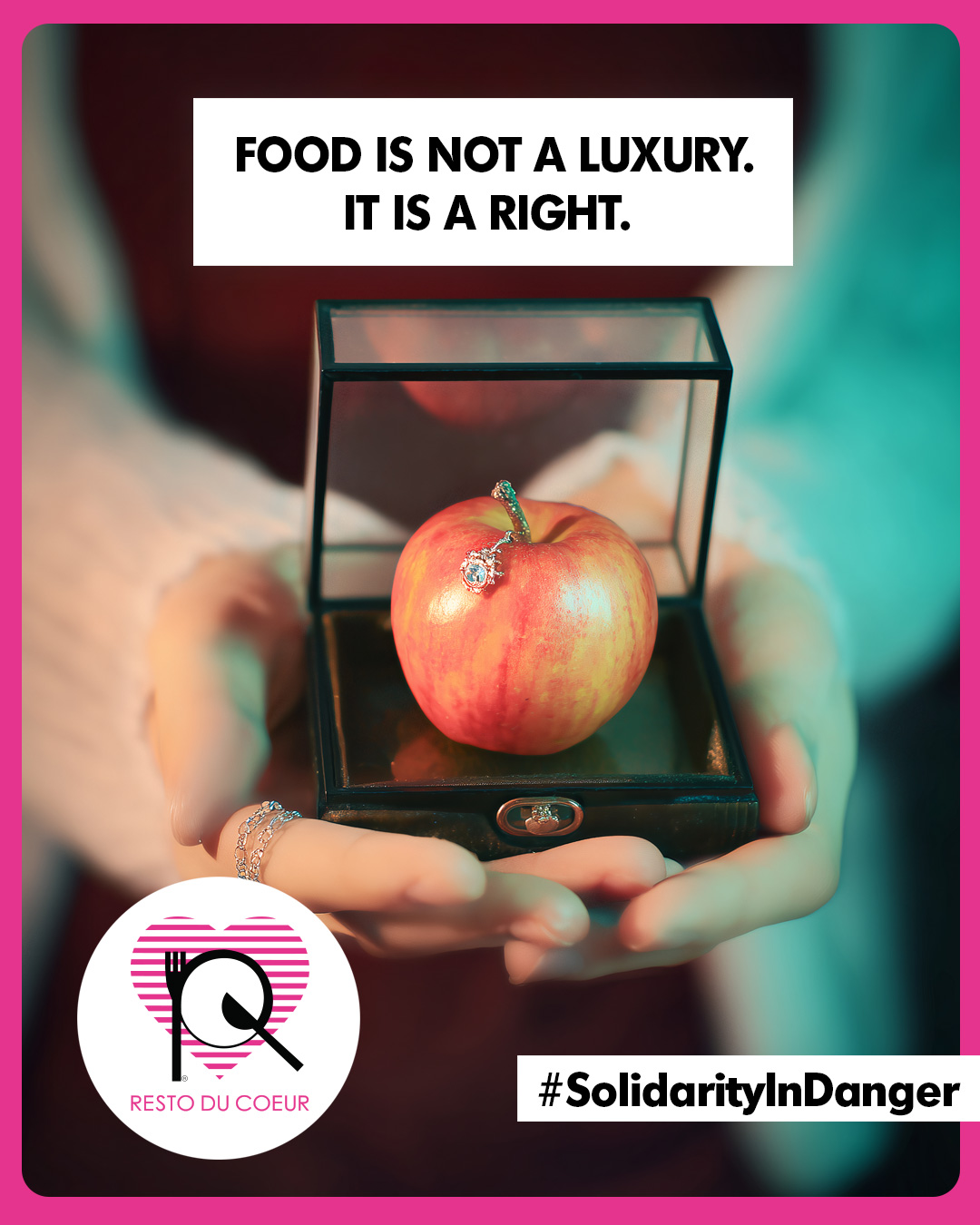
Food Is not optional

Cutting food aid is not just a budgetary adjustment. It undermines a fundamental human right: the right to nourishment. And that, we cannot accept without responding.

Food must not become a luxury.

Solidarity must not be pushed aside.

To keep information flowing, to keep the action alive

Alone, we cannot face this funding retreat.

If this situation moves you, speak about it, share this article to spread our message. Information is the first form of solidarity.

And if you can, support our work in concrete terms: every donation, large or small, helps us maintain our distribution efforts, keep our doors open, and respond to urgent needs with dignity.

Thank you for keeping solidarity alive, today and tomorrow.