
<< WHAT'S NEW ?
ESF+ Food Aid: fewer resources, fewer choices in the parcels
October 2026
Milk, pasta, rice, oil, tinned goods… Part of the products distributed in food parcels comes from an instrument still little known to the general public: the European Social Fund Plus (FSE+).
For the Restos du Cœur and other food‑aid organisations, these foodstuffs are an essential source of supply. But in 2026, reduced funding and a narrower product range are making it harder to assemble parcels that are sufficiently varied.
Essential support in the face of rising demand
The ESF+ helps to combat poverty and social exclusion. In Belgium, the Federal Public Service for Social Integration manages the federal food‑aid programme, which enables the Public Centre for Social Welfare (CPAS) and approved partner organisations to receive free foodstuffs for people experiencing hardship.
This support remains crucial. According to the quantitative study published in 2026 by the Federation of Social Services (FdSS) nearly 561,000 people receive food aid at least once a year in Belgium — a figure that has doubled in ten years.
Pressure continues to rise: in a survey carried out in spring 2026 among 120 services in Brussels and Wallonia, the FdSS noted that 73 % report an increase in demand compared with 2025. At the same time, supplies are decreasing, due to reduced public funding and the dwindling availability of unsold goods.
In 2026, the range is reduced from 25 to 15 products
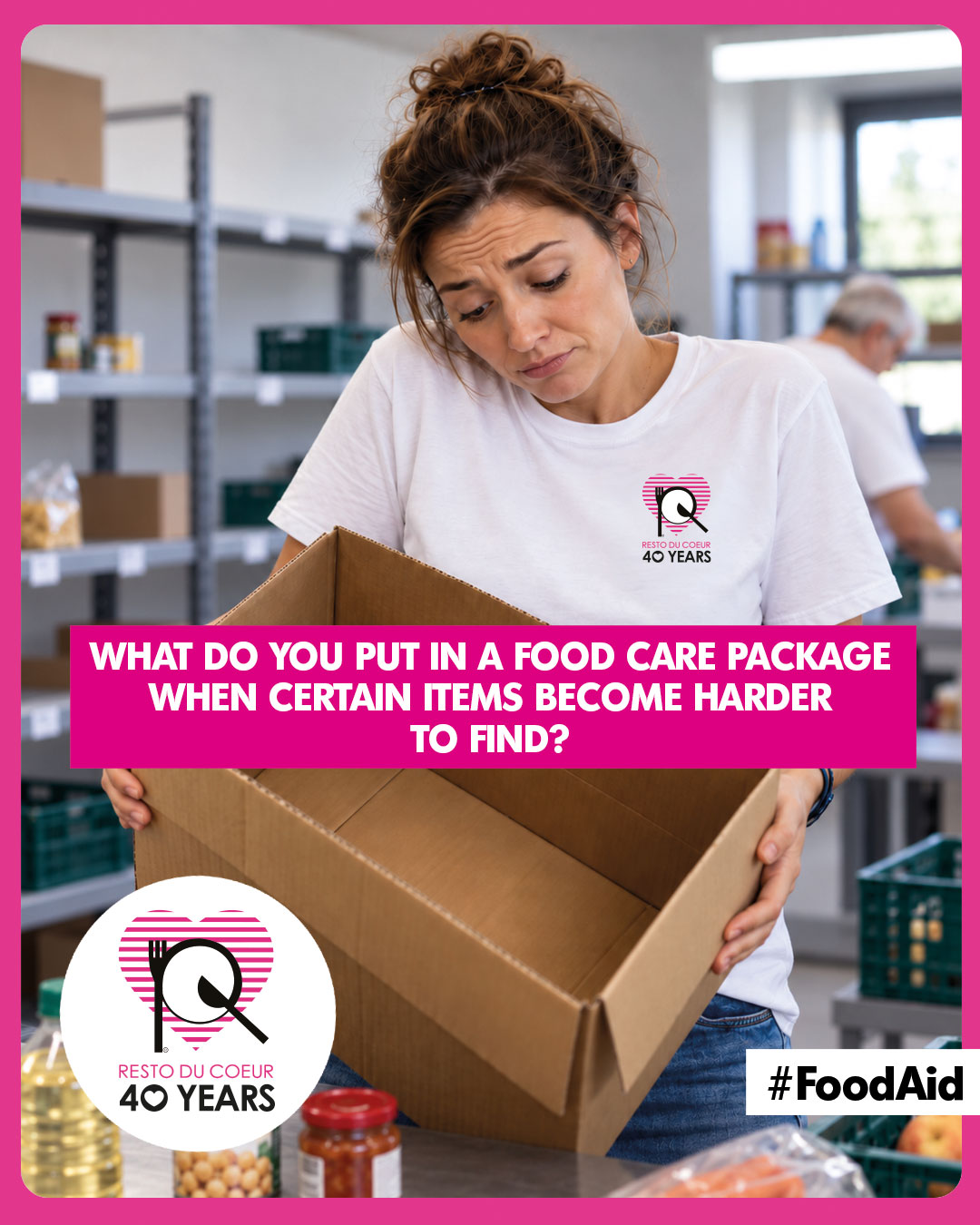
According to the Federal Public Service for Social Integration, the additional federal funding granted for the 2024 and 2025 campaigns made it possible to offer around 25 different food products. Material aid, including hygiene items, could also be financed.
In 2026, the budget for food purchases has been reduced to €15.3 million, and the range to 15 products. No budget has been allocated this year for hygiene products or other non‑food items.
At the Mobile Resto du Cœur Wallonia, making stocks last
On the ground, these restrictions require careful management of supplies. Isabelle Bock, head of the Mobile Resto du Cœur Wallonia, explains:
“When there is less choice, you have to plan further ahead, spread stocks over a longer period and look elsewhere for what is missing in order to try to keep the parcels sufficiently varied.”
Given the limited quantities, it is not possible to offer all products at every distribution. Coffee, for example, must be spread out over time. Some products appear regularly in the parcels, while others, such as fruit, remain difficult to provide when donations and unsold goods are insufficient.
The teams therefore need to anticipate the number of families to support and the frequency with which products are distributed, while avoiding depleting stocks before the next deliveries.
The indispensable ESF+ goods must therefore be supplemented, as far as possible, by donations, unsold items, partnerships or purchases.
And in 2027?
The list published by the Federal Public Service for Social Integration for the 2027 campaign again provides for 15 food products, with some changes in references.
At this stage, the range will therefore not regain the diversity made possible in 2024 and 2025 thanks to the additional funding.
Beyond the contents of the parcels
Without ESF+ goods, the Restos du Cœur would have to find or finance an even larger share of the necessary products. But reduced resources leave less room to meet the diverse needs.
Needless to say, assembling a food parcel is not simply a matter of filling it. It also requires offering a varied diet adapted to the people who receive it.
This is the challenge for the Restos du Cœur: responding to emergency needs while preserving the quality, diversity and dignity of food aid.